Health Impact Fund
Delink the price of drugs from the cost of research.
As currently designed, pharmaceutical markets have a fundamental flaw that mainly affects poor people: the development of new medicines is funded exclusively through markups protected by patents. This flaw causes research neglect of diseases concentrated among the poor. It deprives poor people of access to patented medicines even when these can be mass-produced cheaply. And it encourages suboptimal treatment with medicines that earn much higher markups than those that are best for the patient. The Health Impact Fund would create complementary incentives that delink the price of medicines from the fixed costs of innovation and cover the latter through health impact rewards.
01
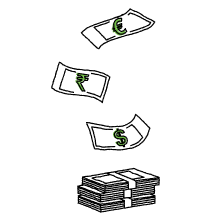
/ 05The Health Impact Fund distributes each year a fixed pool of reward money supplied by states, international taxation and/or charitable funders.

02
/ 05Pharmaceutical innovators register certain new products with the Health Impact Fund - often ones they would otherwise not have developed - and thereby commit to selling them at a price no higher than the cost of manufacture and distribution.
03
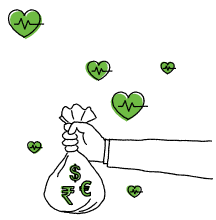
/ 05The Health Impact Fund assesses the registered drugs and measures to what extent they lengthen lives and improve health. It rewards products according to the health gains achieved with them.

04
/ 05Because drugs registered with the Health Impact Fund are sold without markup, they can produce rewardable health gains even among the poor. Wealthier countries that contribute to the Health Impact Fund enjoy the same low prices. Moreover, all patients benefit when innovators are paid not merely for selling such drugs but according to their therapeutic benefits.

05
/ 05We cannot do it without your help! We hope you will collaborate with us in refining and implementing the Health Impact Fund idea so that new medicines can really benefit all.
The Health Impact Fund would expand the range of available medicines, improve access to medicines and reduce the danger of medical errors.
 In summary, the requirement of the Health Impact Fund to assess health benefits is certainly feasible at a reasonable expense and is indeed exactly what is done by IQWiG and other HTA agencies (e.g. HAS in France or NICE in England and Wales) on a daily basis.
 The Health Impact Fund is one of those proposals that can be considered one hundred percent innovative in relation to the question: How do we solve the problem that we actually have such a rich world, and yet in the poorer countries people have no medicines? In my view, this is the very best example of applied ethics that I know of. Here, ethical theory is combined with economic knowledge and applied to an actual problem, and you simply can't do better than that.
 The Health Impact Fund would be an important step towards affordable universal health coverage, which rightly is the WHO's top priority, and towards achieving the third Sustainable Development Goal.
 The Access to Medicine Foundation is committed to improving access to life-saving medicines to people living in low- and middle-income countries. Through its expertise and resources, the pharmaceutical sector has a key role in achieving this. The mission of the Access to Medicine Foundation is to encourage the pharmaceutical sector to do more. We recognise in the Health Impact Fund model an opportunity to motivate pharmaceutical companies to increase access to their products, to invest more in research for diseases that primarily affect the world's most disadvantaged people and to achieve wider distribution. We support the shared goals and aspirations of a pilot of the Health Impact Fund.
 With sufficient funding, the Health Impact Fund could be an effective way of stimulating investment from small and large bio-pharmaceutical companies to address the needs of low-income populations. It would align commercial incentives with social goals of reducing excess morbidity and mortality. It could support companies, including Janssen, in their efforts to develop innovative products within a competitive, market-based framework that rewards outcomes.
 An international Health Impact Fund (HIF) should be established as a supplement to the current patent system. Through Health Impact Fund pharmaceutical companies can voluntarily register their drugs and commit to making them available at the lowest price against payment of support over ten years from the Fund on the basis of major health impact their drugs have. This gives companies incentives to develop medicines for those with the greatest health needs and not only those with the greatest purchasing power.